Welcome to the website for landscape facilities products and knowledge.

How does the table’s design enhance or inhibit airflow in outdoor settings?
The design of an outdoor table is a critical yet often overlooked factor in determining comfort and usability. Far from being merely a static surface, a table's construction can significantly enhance or inhibit airflow, directly affecting the microclimate of your patio, deck, or garden. By understanding key design elements, you can choose furniture that promotes a cooler, more pleasant environment.
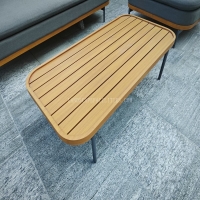
A table's primary surface, or top, is the foremost influencer of airflow. Solid, impermeable materials like slabs of stone, thick glass, or solid wood act as barriers. They trap heat radiating from the ground below and can create a stagnant, warm pocket of air around the seating area. Conversely, designs that incorporate permeability actively encourage ventilation. Perforated metal tops allow air to pass through freely, promoting continuous circulation. Similarly, slatted wood or composite designs with gaps between the planks enable vertical airflow, preventing hot air from becoming trapped. This not only cools the surface of the table itself but also improves air movement for seated guests.
The role of the table's base and understructure is equally important. A solid, paneled apron or a bulky central pedestal that reaches the ground can severely obstruct cross-ventilation. This design blocks the natural horizontal flow of air across the space, contributing to a stuffy atmosphere. In contrast, elevated bases with open frames, such as those with hairpin legs, an X-frame, or a trestle design, maximize air passage. They allow breezes to travel unimpeded beneath and around the table, facilitating a cooling effect throughout the entire zone.
Material choice further modulates thermal dynamics. Metals, particularly aluminum and steel, are highly conductive. While they can become hot in direct sun, their conductivity also means they dissipate heat quickly in the shade or when a breeze passes over, especially in perforated forms. Dense materials like concrete and stone have high thermal mass, absorbing and retaining heat for extended periods, which can radiate warmth long after sunset. Treated woods and modern polymers often strike a balance, providing structure without excessive heat retention, particularly in open, slatted configurations.
Ultimately, selecting a table with airflow in mind transforms an outdoor setting. Opting for designs with open tops, elevated frames, and breathable materials works in concert with the environment to disperse heat, reduce stuffiness, and enhance comfort. This deliberate choice turns a simple piece of furniture into an active component of a cooler, more inviting outdoor living area.
Related search: