Welcome to the website for landscape facilities products and knowledge.

How does the table’s construction resist corrosion, especially in coastal or high-humidity environments?
In coastal regions and high-humidity climates, outdoor tables face relentless challenges from salt spray, moisture, and environmental contaminants. The secret to their longevity lies in sophisticated construction methods specifically designed to combat corrosion. Premium tables utilize marine-grade materials such as 316 stainless steel, which contains molybdenum for enhanced resistance to saltwater corrosion. Aluminum tables often feature powder coatings that create a protective barrier while allowing for aesthetic customization.
The manufacturing process incorporates advanced joining techniques that eliminate moisture traps where corrosion typically initiates. Welded seams are ground smooth and treated, while specialized fasteners made from corrosion-resistant materials prevent weak points in the assembly. Many manufacturers apply multiple protective layers, including chemical conversion coatings that bond to the metal substrate, followed by epoxy primers and durable topcoats that withstand UV radiation and salt exposure.
For tables in particularly aggressive environments, additional safeguards include sacrificial anodes that attract corrosive elements away from critical components. The design also incorporates strategic water drainage channels and ventilation pathways that prevent stagnant moisture accumulation. Through this comprehensive approach combining material science, protective treatments, and intelligent engineering, modern outdoor tables maintain their structural integrity and appearance despite continuous exposure to demanding coastal conditions and high humidity environments.
Related search:
Recommendation
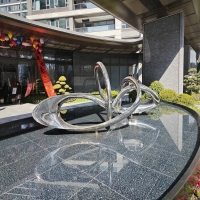
Abstract art sculpture, stainless steel metal sculpture, large-scale water feature sculpture






