Welcome to the website for landscape facilities products and knowledge.

How does the table perform in terms of resistance to mold, mildew, and bacterial growth?
Modern tables are engineered with sophisticated resistance mechanisms against microbial threats like mold, mildew, and bacteria. The performance largely depends on material composition, surface treatments, and manufacturing technologies.
High-pressure laminates and solid surface materials create non-porous surfaces that prevent moisture penetration - the primary requirement for microbial growth. Many manufacturers incorporate antimicrobial additives directly into the material matrix during production. Silver-ion technology and zinc-based compounds disrupt cellular functions of microorganisms, effectively inhibiting their reproduction.
The integration of moisture-resistant cores in tables prevents internal damage that could compromise structural integrity. Tables designed for healthcare and food service environments often feature seamless construction with coved edges, eliminating crevices where contaminants might accumulate.
Advanced coating systems provide additional protection. UV-cured finishes and polyurethane coatings create impermeable barriers while maintaining aesthetic appeal. Regular cleaning with appropriate disinfectants enhances these built-in protective qualities, ensuring long-term performance against biological threats.
Laboratory testing standards like ASTM G21 and ASTM D3273 determine the material's resistance profile, with many commercial tables demonstrating complete inhibition of microbial growth even under high humidity conditions. This makes contemporary tables suitable for moisture-prone environments while maintaining hygiene standards.
Related search:
Recommendation
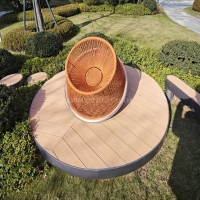
Swivel chair-Specialty steel structure woven rattan leisure chair with rotatable design






