Welcome to the website for landscape facilities products and knowledge.

Can the trashcan opening be made smaller to discourage people from putting in large bags of household trash?
It's a question that nags at the minds of urban planners and sustainability advocates alike: can the very design of our humble trash can influence behavior? Specifically, can shrinking the aperture of a public or communal bin actively discourage people from stuffing in oversized bags of household waste? The answer, much like the act of forcing a bulging bag through a tight hole, is complex and requires a bit of squeezing.
From the trash can's perspective, its mouth is its defining feature. A wide, gaping maw is an open invitation. It silently beckons, "Go ahead, toss it all in." But a smaller, more measured opening is not just a physical constraint; it's a psychological nudge. It forces a moment of pause. The user must interact with the bin, not just lob a payload from a distance. This simple act of having to carefully feed trash through a smaller hole can make the disposal process more intentional. It creates a minor friction point—a gentle reminder that this space is for individual items or properly sized bags, not a dumping ground for home clean-outs.
However, the strategy is not without its potential pitfalls. A poorly implemented smaller opening might lead to frustration, resulting in bags being left beside or on top of the bin, creating a worse litter problem. It could also pose accessibility issues. The success of this design intervention hinges on clear communication. The bin must "speak" through its design and signage, explaining its purpose—perhaps as a receptacle for on-the-go waste, not domestic bulk disposal. Complementary systems, like convenient access to bulk waste drop-off sites, are essential for this to work. Ultimately, while a smaller opening can be a clever tool to guide behavior and promote proper waste sorting, it is not a standalone solution. It must be part of a broader, thoughtful conversation about convenience, responsibility, and holistic waste management infrastructure. The goal isn't to make disposal difficult, but to make the right choice the easier one.
Related search:
Recommendation
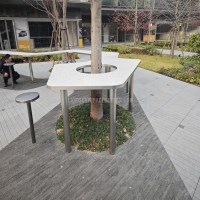
An outdoor bar counter with stainless steel and terrazzo materials in an irregular shape






