Welcome to the website for landscape facilities products and knowledge.

Where is the best place to position a trashcan along a walking path to keep the area clean?
Have you ever wondered why some walking paths remain immaculate while others are littered with debris, despite having trash cans? The secret isn't just about having bins; it's about listening to where they *want* to be. A trash can isn't just a receptacle; it's a silent guardian of cleanliness, and it performs best when positioned with thoughtful strategy.
The most effective location is never at the very start of a path, where energy is high and hands are empty, nor is it at the very end where visitors are already departing. The sweet spot lies at natural "decision points." Imagine a bench overlooking a scenic view. A person sits, enjoys a snack, and finishes it. At that moment of completion, their eyes instinctively scan for a solution. Placing a bin within 15-30 feet of this resting point is a courtesy it eagerly provides. It intercepts litter at the precise moment the decision to discard is made.
Furthermore, a trash can thrives at path junctions or after a noticeable transition, like exiting a wooded area into an open field. These are psychological milestones where people naturally pause and reassess. A bin positioned here feels like a timely service, not an afterthought. Visibility is its best friend. It should stand proudly in the sightline, not hidden behind a bush. A lonely, overflowing bin is a discouraged one. Regular emptying is the encouragement it needs to keep doing its vital job.
Ultimately, the best place is where human behavior naturally creates a need. By understanding the rhythm of a walk—the pauses, the breaks, the moments of completion—we can place these silent guardians where they are most needed and most likely to be used. It’s a simple act of empathy for both the visitor and the path itself, ensuring that natural beauty remains uninterrupted by the carelessness of waste.
Related search:
Recommendation
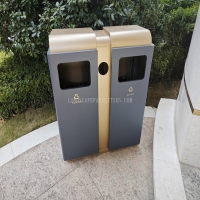
Double-bucket garbage bin, outdoor, metal, multi-color, powder-coated, double-bucket trash can






