Welcome to the website for landscape facilities products and knowledge.

What is the table’s resistance to damage from exposure to smoke or fire residues?
When assessing a table's resistance to damage from smoke or fire residues, the core determinant is its material composition. Solid hardwoods like oak or maple possess inherent density that can offer a moderate barrier against superficial smoke penetration, though prolonged exposure will still stain and odorize the surface. Engineered woods, such as MDF or plywood, are more vulnerable; their porous structures and adhesive layers readily absorb smoke particles and can weaken significantly when exposed to heat and acidic residues.
Modern finishes play a critical role. High-quality, heat-resistant lacquers, ceramic coatings, or specialized fire-retardant paints can create a protective seal, significantly enhancing resistance to both staining from soot and the corrosive effects of chemical residues left by smoke. Metal tables, particularly those with powder-coated finishes, generally exhibit high resistance to fire residues, though they may discolor under extreme heat. Glass tables resist absorption but require meticulous cleaning to remove soot films without scratching.
Post-exposure action is crucial. Immediate, gentle cleaning with appropriate pH-neutral solutions for the specific material can prevent permanent setting of residues. Ultimately, a table's resilience is a function of its base material, the integrity of its protective finishes, and the speed of post-incident care. No common household table is entirely fireproof, but informed material choices and proactive maintenance can substantially mitigate long-term damage.
Related search:
Recommendation
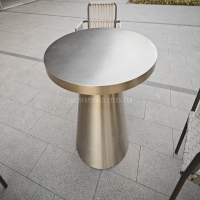
Outdoor Metal Table - Classic Outdoor Furniture, Stainless Steel Table, Durable and Reliable






