Welcome to the website for landscape facilities products and knowledge.

How does the table’s design facilitate easy cleaning, especially for outdoor use?
Outdoor tables face unique challenges from weather, spills, and debris. Modern design directly addresses these with specific features that transform cleaning from a chore into a quick, simple task. The primary facilitator is material selection. Tables crafted from powder-coated aluminum, synthetic wicker, or UV-stabilized poly lumber resist staining, rust, and mildew inherently. Their non-porous surfaces prevent dirt and moisture from seeping in, allowing most messes to be wiped away with a damp cloth.
The construction philosophy is equally critical. Designers prioritize seamless surfaces and minimal joints where food or dirt can accumulate. A tabletop made from a single, smooth slab of tempered glass or composite material offers no cracks for crumbs or pollen to hide. Similarly, frames with clean, welded lines avoid the hard-to-reach crevices common in ornate, traditional furniture.
For truly outdoor-specific use, integrated drainage is a game-changer. Many patio dining tables now feature tabletops with subtle, concentric grooves or a slight, imperceptible tilt that channels rainwater away, preventing pooling that leads to water spots and mineral deposits. Others incorporate perforated surfaces or center holes, allowing liquid to drain directly through, which is ideal for garden-side bistro sets.
Finally, thoughtful details enhance user convenience. Removable center umbrellas allow full access to the table surface. Quick-release mechanisms on some models enable the separation of the top from the base for thorough washing or compact storage. By combining durable, easy-wipe materials with seamless architecture and practical drainage, these design choices ensure your outdoor table remains pristine with minimal effort, letting you spend more time enjoying your outdoor space and less time maintaining it.
Related search:
Recommendation
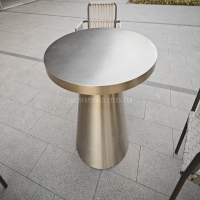
Outdoor Metal Table - Classic Outdoor Furniture, Stainless Steel Table, Durable and Reliable






