Welcome to the website for landscape facilities products and knowledge.

How do you prevent insects from nesting in or around a public trashcan?
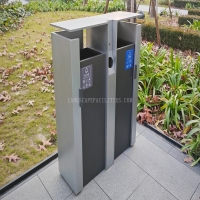
As a public trash can, I stand tall on street corners, a silent guardian of urban cleanliness. Yet, my existence often attracts unwanted guests—insects seeking shelter and sustenance. To prevent these tiny invaders from turning me into their nesting ground, a multi-layered defense is essential.
My first line of defense is consistent and proper maintenance. I thrive on regular emptying; stagnation is my enemy. When waste overstays, it ferments, releasing odors that act as a beacon for flies, ants, and roaches. A schedule that ensures my contents are removed before they become a problem is crucial. Furthermore, a deep cleaning with a mild disinfectant or a vinegar solution washes away the sticky residues and scent trails that insects follow. A clean interior and exterior leave no invitation.
My design and placement are my inherent armor. A tight-fitting lid is my shield, a physical barrier that denies easy access. Lids that close securely, perhaps even with a pedal mechanism, are far superior to gaping openings. My body should be seamless, with no cracks, holes, or crevices where insects can hide or enter. Placing me on a hard, level surface like concrete, rather than soil or grass, discourages burrowing insects like ants from building colonies beneath me. Good drainage at my base prevents water accumulation, eliminating a breeding ground for mosquitoes.
The environment around me plays a supporting role. Strategic landscaping helps; keeping vegetation trimmed back removes bridges and hiding spots. Using insect-repelling plants like lavender, mint, or marigolds in nearby planters can create a natural deterrent zone. For persistent problems, targeted, eco-friendly interventions can be considered. Applying food-grade diatomaceous earth around my base creates a harmless (to humans) but lethal barrier to insects with exoskeletons. Placing non-toxic bait stations at a safe distance can intercept ants before they reach me.
Ultimately, my well-being is a shared responsibility. Public education is key. Clear signage encouraging proper waste disposal—sealing bags, not littering—reduces the attractants at the source. When the community sees me not just as a dumpster, but as a vital part of our shared space’s health, they become active participants in this defense.
By combining diligent maintenance, intelligent design, environmental management, and community awareness, we can maintain my purpose. I can remain a humble servant of public hygiene, not a bustling high-rise for six-legged squatters. Together, we can ensure I stand not as a pest magnet, but as a true guardian of cleanliness.
Related search: