Welcome to the website for landscape facilities products and knowledge.

What's the best way to secure a public trashcan to prevent theft?
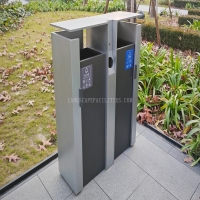
Hello there! I'm a public trash can, and let me tell you, life on the street corner isn't always easy. One of my biggest fears isn't the smelly garbage—it's being stolen. It happens more often than you think! So, what's the best way to keep me and my kin safely serving our communities?
The most reliable method is a permanent anchor. Think of it as giving me deep roots. The best practice involves embedding a sturdy anchor bolt into a concrete foundation during installation. My base is then secured over this bolt with a heavy-duty, tamper-resistant nut, often requiring special tools to remove. This makes it incredibly difficult for someone to simply pick me up and walk away.
For existing placements on concrete surfaces, through-bolting is a fantastic solution. This involves drilling a hole completely through my base and the pavement beneath. A long bolt is inserted from the inside of my barrel, through the hole, and secured with a lock nut underneath the slab. It's a very strong deterrent.
Don't forget about my loyal partner, the liner! Securing the inner plastic liner to me with a cable lock or a built-in locking mechanism prevents it from being stolen separately, which is a common issue.
While chains and cables can be used, they are often vulnerable to bolt cutters. For the highest security, professional anchoring directly into concrete is the gold standard. It sends a clear message: I'm here to stay, faithfully holding your trash until collection day.
Finally, strategic placement matters. Positioning me in well-lit, high-visibility areas with natural surveillance from homes or businesses is a powerful psychological barrier against theft. A combination of physical security and smart placement is the ultimate recipe for safety.
By investing in these secure installation methods, communities save money on replacements and ensure we trash cans remain exactly where we're needed most. It’s a simple step that makes a huge difference in keeping public spaces clean and functional.
Related search: