Welcome to the website for landscape facilities products and knowledge.

We want to discourage people from sleeping on our benches; are there any designs that help with that without being hostile?
The question of how to design public benches that naturally discourage prolonged sleeping, without resorting to overtly hostile features, is a delicate balance between urban management and social empathy. The goal isn't to punish exhaustion but to gently guide behavior towards the bench's primary purpose: seated respite. Several ingenious, non-aggressive design philosophies achieve this.
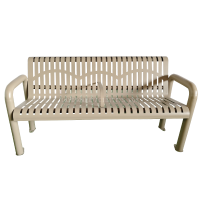
One effective approach is through ergonomics optimized for short-term comfort. Consider benches with a slight, graceful downward curve in the seating surface. This contour is perfectly comfortable for a 15-20 minute sit but becomes subtly awkward for lying down, as the body seeks a flat plane. Similarly, incorporating gentle, raised dividers or armrests at logical intervals can segment the bench into distinct seating zones. These divisions naturally define personal space for seated individuals, making sprawling across the entire length impractical, without being the stark, isolating barriers seen in hostile designs.
Material choice and environmental integration also play a key role. Using materials that are comfortable when clothed but less so otherwise—like slightly textured wood or stone that breathes with ambient temperature—can be a passive deterrent. More proactively, positioning benches in active, well-lit areas of pedestrian flow, perhaps near vibrant planters or public art, creates a social and sensory environment less conducive to sleep. The design whispers its intended use through context, not confrontation.
Ultimately, the most humane designs move beyond mere discouragement. They ask, "How can we support dignified seated rest for all?" This might mean complementing traditional benches with other forms of public infrastructure, like public restrooms or information about local shelters, addressing broader needs. By prioritizing inclusive comfort for the seated majority through smart, subtle shaping and placement, we create welcoming spaces that respectfully nudge behavior, fostering a shared sense of care for our common urban landscape.
Related search: