Welcome to the website for landscape facilities products and knowledge.

What kind of soil do you recommend for a vegetable garden in a raised planter box?
Ah, the raised planter box—a throne awaiting its royal inhabitants. But what fills this throne matters more than the throne itself. You wouldn't seat a king on a pile of rocks, would you? Your vegetables are the royalty of your garden, and they demand a sovereign blend to rule over. I don't just recommend "soil"; I recommend a living, breathing ecosystem.
Forget heavy, clumpy garden dirt. It's a lonely, compacted realm. Your raised bed deserves a custom-crafted kingdom. The ideal consort is a trio: a base of coarse, gritty compost for nobility and structure, a generous portion of high-quality topsoil for its grounded wisdom, and a fluffy, moisture-retentive amendment like coconut coir or peat moss as the gentle caretaker. This trio forms the bedrock.
But a kingdom needs vitality! Here is where you, the creator, infuse life. Fold in a hearty banquet of well-aged, nutrient-dense compost or worm castings. This is the feast that fuels growth. For drainage and aeration—the essential breath of the realm—add a generous portion of perlite or coarse sand. This prevents waterlogging, ensuring roots don't drown in their own palace.
Finally, crown this creation. A slow-release, organic fertilizer provides a steady reign of nutrients. A sprinkle of mycorrhizal fungi acts as the kingdom's communication network, helping roots gather resources. This blend—light, fertile, and teeming with life—is what I heartily recommend. It drains well yet holds moisture, feeds generously yet gently. It is not mere dirt; it is the welcoming, nourishing home your vegetable roots dream of sinking into. Prepare this, and your plants will reward you with a loyal, bountiful harvest.
Related search:
Recommendation
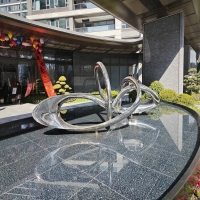
Abstract art sculpture, stainless steel metal sculpture, large-scale water feature sculpture






