Welcome to the website for landscape facilities products and knowledge.

What's the best way to anchor a trashcan in a soil or mulch bed?
Ah, the wandering trash can. It's a familiar sight: after a brisk wind or an enthusiastic nudge from a passing creature, your once-dutiful bin is lying on its side, spilling its contents and rolling away in disgrace. If your bin's home is a soft bed of soil or mulch, its wanderlust is even stronger. But fear not! With a few simple techniques, you can convince your trash can to stay firmly put, becoming a reliable sentinel in your garden.
The secret lies in creating a simple, permanent anchor point. The most effective and low-profile method is the "Ground Stake Tether." Here's how to befriend your bin and give it roots:
First, gather a robust metal stake, like a piece of rebar or a long, sturdy tent peg, and a strong tether. A heavy-duty zip tie, a length of galvanized wire, or even a durable dog leash clip works perfectly.
Next, identify the anchor point. On most bins, there's a handy handle or a reinforced lip under the lid hinge at the back. This is your ideal connection spot. Now, drive your stake deep into the ground at a slight angle, right behind where the trash can sits. Aim for at least 12 to 18 inches into the earth to ensure a firm hold.
Finally, connect the two. Loop your tether through the bin's handle or anchor point and securely fasten it to the ground stake. Leave just a little slack—enough for you to lift the lid and remove the bin for collection, but not enough for it to tip over. The goal is companionship, not imprisonment.
For a more permanent solution in mulch beds, consider the "Auger Anchor." Using a large screw-style anchor (like those for dog tie-outs or satellite dishes), screw it directly into the ground until only the eyelet is visible. Then, use a carabiner or chain link to attach your bin. This method provides exceptional holding power in loose mulch.
Remember, a happy trash can is a stable one. By providing it with a steadfast friend in the ground, you prevent messy escapes, reduce noise, and maintain order in your outdoor space. It’s a small act of kindness that your garden—and your future self—will thank you for.
Related search:
Recommendation
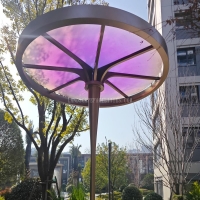
Metal frame with gradient color acrylic combined with high-end shading landscape facilities






