Welcome to the website for landscape facilities products and knowledge.

What are the anti-static properties of the table’s surface for electronic equipment?
In the realm of electronics manufacturing, repair, and assembly, the work surface is a critical line of defense. The anti-static properties of a table's surface are not a mere convenience but a fundamental requirement for protecting sensitive electronic components from Electrostatic Discharge (ESD). A surface with proper anti-static characteristics functions by preventing the buildup of static electricity and providing a controlled, safe path for any static charge to dissipate harmlessly to ground.
These specialized surfaces are typically constructed from static-dissipative materials. Unlike conductive materials, which allow rapid charge flow, or insulating materials, which trap charge, static-dissipative materials have a controlled electrical resistance. This middle-ground property allows charges to bleed off slowly and safely, preventing a sudden, damaging discharge. Common materials include laminates with carbon or metallic particles, vinyl or rubber mats, and specially treated coatings.
The core benefit is ESD protection. A microscopic static shock, imperceptible to a human, can instantly fry a microchip, degrade a component, or cause latent failures. An anti-static surface, when properly grounded using a wrist strap and common point ground, ensures that the operator, the tool, and the workpiece are all at the same electrical potential, eliminating the risk of a damaging spark.
Furthermore, these surfaces aid in controlling particulate contamination. Many anti-static materials are also low-shedding, which is crucial in cleanroom environments. When selecting a surface, key specifications to consider are its surface resistance (typically measured between 10^6 to 10^9 ohms/square) and its compliance with international standards like ANSI/ESD S20.20.
Ultimately, investing in a properly specified anti-static workbench is an investment in product quality, reliability, and yield. It creates a safe zone where precision electronics can be handled without the invisible threat of electrostatic damage, ensuring the integrity and longevity of the final product.
Related search:
Recommendation
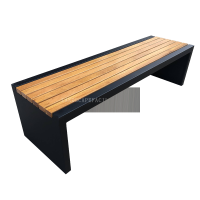
Modern Stainless Steel Begonia Wood Park Chair Outdoor Courtyard Leisure Sun Protection Bench Long Seat






