Welcome to the website for landscape facilities products and knowledge.

How does the table’s surface finish resist scratches, stains, and daily wear?
The resilience of a table's surface against daily life is no accident. It's a result of sophisticated finish engineering designed to create a durable barrier. Modern finishes, whether lacquer, polyurethane, oil-based, or laminate, function through a combination of hardness, chemical resistance, and sealed porosity.
The primary defense against scratches is the finish's hardness, often measured on the pencil hardness scale. A hard, cured top layer acts like a shield, causing abrasive objects to glide rather than dig into the softer wood beneath. For stains, the finish creates a non-porous, impermeable seal. This prevents spills—from water to wine and oil—from penetrating the surface and causing permanent discoloration or rings. The seal blocks both liquids and the microscopic particles that cause stains.
Daily wear, or "patina," is resisted through the finish's flexibility and bonding strength. High-quality finishes are not brittle; they have slight flexibility to withstand minor impacts and thermal expansion without cracking. The bond between the finish and the substrate prevents peeling or delamination. Technologies like UV-cured coatings or catalyzed varnishes create exceptionally dense molecular networks, offering superior resistance to abrasion from dishes, cleaning, and general use.
Maintenance is part of the defense system. Using coasters, placemats, and gentle cleaners preserves the integrity of the finish. Even the most durable finish can be compromised by extreme abuse or harsh chemicals. Ultimately, a table's surface finish is a sacrificial protective layer. It absorbs the minor insults of daily life, ensuring the underlying material remains pristine and beautiful for years, combining advanced chemistry with practical design for enduring performance.
Related search:
Recommendation
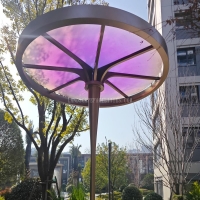
Metal frame with gradient color acrylic combined with high-end shading landscape facilities






