Welcome to the website for landscape facilities products and knowledge.

What are the most significant differences in the table’s performance when used in temporary versus permanent installations?
When evaluating table performance, the distinction between temporary and permanent installations is profound, impacting functionality, longevity, and user experience. Temporary installations, often used for events, short-term projects, or flexible workspaces, prioritize portability, quick assembly, and lightweight materials. Consequently, performance in these settings emphasizes ease of movement and reconfiguration over long-term durability. Tables may exhibit more flex, less resistance to surface wear, and lower weight capacities, as the primary need is immediate, adaptable utility.
In contrast, permanent installations, foundational in offices, homes, or institutions, demand optimized performance for sustained use. Here, stability, load-bearing capacity, and material resilience are paramount. Tables are designed with robust construction—often using solid wood, metal, or high-grade composites—and are securely anchored or built-in to minimize vibration or shifting. Surface finishes are typically more durable to withstand daily abrasion and cleaning. The performance focus shifts from mobility to enduring structural integrity, consistent flatness, and long-term aesthetic preservation.
The most significant performance differences thus lie in stability and vibration resistance (markedly higher in permanent setups), material and finish durability (enhanced for long-term wear), load capacity (greater for permanent installations), and environmental adaptation. Permanent tables are engineered for specific climate conditions and consistent use, while temporary tables offer versatility at the expense of some robustness. Understanding these differences ensures the right table is selected for its intended installation life, balancing immediate needs with long-term performance expectations.
Related search:
Recommendation
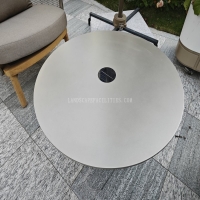
Outdoor stainless steel table with solar-powered ambient lighting feature - excellent design.






