Welcome to the website for landscape facilities products and knowledge.

How does the table’s design account for the need for easy stacking or nesting when not in use?
Modern table design ingeniously addresses the need for easy storage through strategic engineering and thoughtful form. The core principle lies in creating identical or complementary geometric profiles. Tables designed for stacking typically feature a tapered or slightly angled leg structure, allowing the legs of one unit to fit securely around the apron or base of the table beneath, preventing slippage and ensuring stable, vertical piles. For nesting, designers often employ a graduated size system within a matching silhouette. A set of tables shares the same aesthetic and leg angle, but each subsequent table is slightly smaller in both tabletop dimensions and height, enabling them to tuck neatly underneath one another, minimizing the footprint to that of the largest unit.
Key design elements include lightweight yet robust materials like aluminum or engineered wood, and reinforced corners to withstand repeated movement. The undersides are often smoothed or designed with recessed areas to avoid surface damage when stacked. The ultimate goal is a seamless transition from functional furniture to a compact, organized storage state, making these designs ideal for dynamic spaces like cafes, event venues, and modern homes where flexibility and efficient use of space are paramount.
Related search:
Recommendation
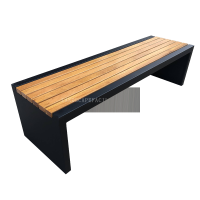
Modern Stainless Steel Begonia Wood Park Chair Outdoor Courtyard Leisure Sun Protection Bench Long Seat






