Welcome to the website for landscape facilities products and knowledge.

How does the table’s design account for the need for sound absorption in noisy environments?
In increasingly noisy open-plan offices and public spaces, table design has evolved from passive furniture to active acoustic participants. Modern sound-absorbing tables incorporate multiple strategic design elements that address noise pollution systematically. The most fundamental innovation lies in material selection—specialized acoustic felts, perforated wood composites, and fabric-wrapped panels replace traditional solid surfaces. These porous materials trap sound waves through friction, converting acoustic energy into minimal heat rather than allowing reflection.
Beyond surface materials, structural design plays an equally crucial role. Many acoustic tables feature integrated baffles or vertical screens that rise from the table edge, intercepting horizontal sound travel between adjacent workers. Some designs incorporate hollow cavities filled with mineral wool or recycled acoustic foam beneath the work surface, creating hidden absorption chambers. The table's underside often receives textured or angled treatments to diffuse rather than reflect sound downward.
Edge design proves particularly significant, as hard table edges typically create sound-reflection points. Rounded profiles with acoustic padding or felt-wrapped rims minimize this effect. Some manufacturers even create "acoustic canopies"—subtle overhead elements attached to table frames that capture rising conversations before they spread.
Advanced designs consider frequency targeting. Denser materials absorb lower-frequency rumbles from HVAC systems, while medium-density felts address mid-range speech frequencies that most disrupt concentration. The table's mass and stability also contribute; heavier frames reduce vibration transmission that can amplify impact noises.
These design considerations collectively transform tables from noise reflectors into absorption tools. When deployed strategically throughout a space, acoustic tables can reduce ambient noise levels by 3-6 decibels—a perceptible difference that correlates with improved cognitive performance and reduced stress. The integration of sound absorption directly into work surfaces represents a fundamental shift toward holistic acoustic design, where every element serves dual functional and environmental purposes.
Related search:
Recommendation
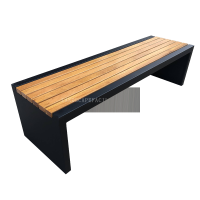
Modern Stainless Steel Begonia Wood Park Chair Outdoor Courtyard Leisure Sun Protection Bench Long Seat






