Welcome to the website for landscape facilities products and knowledge.

How does the table’s base design affect legroom and seating comfort for users?
When selecting a table, we often focus on the tabletop material or style, overlooking a critical component beneath the surface: the base design. This foundational element is a primary dictator of legroom and overall seating comfort, directly influencing posture and the user experience.
The central challenge is the conflict between base support and space for movement. A bulky base may offer stability but can severely limit where users can place their legs, leading to awkward positioning and discomfort. Conversely, a poorly placed or designed base fails to adequately support the tabletop, causing wobble and instability.
Different base types offer distinct ergonomic profiles. The classic Four-Leg Base provides corner stability but can restrict seating at the corners where legs intersect. A Pedestal or Single Central Base is a champion of legroom, freeing up perimeter space and allowing flexible, unobstructed seating—ideal for round tables. Trestle Bases, with their horizontal beam connecting two end supports, create a clear zone at the ends but may limit knee space for those seated directly along the sides.
Key measurements are crucial. Under-Table Clearance (the vertical height from floor to the underside of any apron or beam) must accommodate seated thigh height. Kick Space (the recessed area at the bottom) prevents feet from scuffing the base. The Footprint of the base itself determines how much open floor space remains for legs to move naturally.
Ultimately, the ideal base marries form and function. It must provide unwavering structural support while maximizing the free, open area beneath the table. This careful balance ensures that users are not constantly negotiating with the furniture, but instead enjoying a natural, comfortable posture that enhances prolonged sitting, whether for dining, working, or conversation.
Related search:
Recommendation
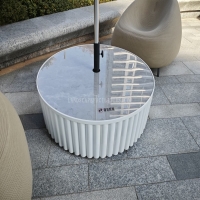
Round metal tube border design table with tempered glass or granite countertop on the top.






