Welcome to the website for landscape facilities products and knowledge.

How does the table’s shape influence space utilization in small or large areas?
The geometry of your table is far more than an aesthetic choice; it is a fundamental decision that dictates the functionality and perceived spaciousness of a room. In compact areas, such as studio apartments or small dining nooks, a round table is often the superior solution. Its lack of sharp corners eliminates hazardous protrusions in tight traffic paths and allows for easier, more fluid movement around it. The circular form can also accommodate an extra person in a pinch, as seating is not fixed to defined sides. Psychologically, a round table fosters a sense of intimacy and equality, making a small space feel more cohesive and less cramped.
Conversely, in large, open-plan areas or formal dining rooms, rectangular and oval tables come into their own. Their elongated shape naturally defines a zone within a vast space, providing structure and anchoring the room. They excel at maximizing seating capacity along their length, making them ideal for entertaining larger groups. A rectangular table can efficiently line up against a wall or serve as a room divider between a kitchen and living area, thereby enhancing space utilization in a multifunctional way. Square tables offer a middle ground, providing a modern, symmetrical look but requiring careful placement to avoid feeling bulky in small rooms or lost in large ones.
The choice extends beyond mere dimensions. A round table in a large room can create a soft, conversational focal point, breaking the monotony of straight lines. A rectangular table in a small room, if proportionally slim and paired with benches, can be space-efficient along a wall. Ultimately, understanding the spatial dynamics of table shapes—the way round tables promote flow, rectangular tables command space, and square tables demand balance—empowers you to optimize both utility and atmosphere, regardless of your square footage.
Related search:
Recommendation
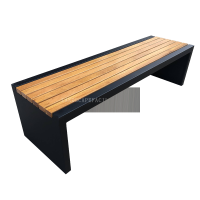
Modern Stainless Steel Begonia Wood Park Chair Outdoor Courtyard Leisure Sun Protection Bench Long Seat






