Welcome to the website for landscape facilities products and knowledge.

What are the psychological effects of the table’s design on meeting dynamics and participant engagement?
The humble meeting table is far more than a piece of furniture; it is a silent architect of human interaction. Its design exerts a profound, often subconscious, influence on the psychological dynamics of a meeting and the level of engagement from its participants. Understanding this can transform gatherings from passive information sessions into active, collaborative engines.
Rectangular tables, the traditional default, inherently establish a hierarchy. The person at the "head" is psychologically framed as the authority figure, which can centralize communication and potentially stifle contributions from those along the sides. Participants opposite each other may unconsciously adopt a more adversarial or negotiating stance. This design can reinforce formal power structures but may inhibit open dialogue and equal participation.
In contrast, round tables are the great equalizers. With no head, they promote a sense of unity and shared purpose. Eye contact is easier, communication flows more freely around the circle, and the psychological barrier between "leader" and "attendee" diminishes. This fosters greater psychological safety, encouraging quieter members to contribute and enhancing collective ownership of the discussion. The circle symbolizes collaboration, directly boosting participant engagement.
Modern adaptations like boat-shaped, oval, or modular tables blend these effects. They can soften hierarchy while providing a focal point. The material and aesthetic also play a role: warm wood feels inviting and creative, while cold glass and metal may feel more sterile and formal. Comfortable seating distance is key; too far apart creates detachment, too close can feel intrusive.
Ultimately, the table sets the stage. A round or non-hierarchical table signals an expectation of collaboration, putting participants in a more open and engaged psychological state. A long boardroom table signals a review or decision-making forum, priming individuals for more formal debate. By intentionally selecting a table design that matches the meeting's goal—be it brainstorming, decision-making, or team building—leaders can harness environmental psychology to significantly improve dynamics, engagement, and outcomes. The table, therefore, is not just where we meet, but a fundamental tool shaping how we think and interact together.
Related search:
Recommendation
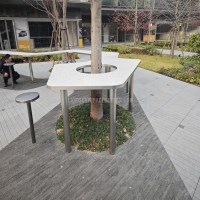
An outdoor bar counter with stainless steel and terrazzo materials in an irregular shape






