Welcome to the website for landscape facilities products and knowledge.

How does the table’s design contribute to its resistance against damage from vandalism or misuse?
The durability of a table in public or high-traffic spaces is not a matter of chance but a product of deliberate, engineered design. Its resistance to vandalism and misuse stems from a multi-faceted strategy that begins with material selection. Surfaces are often crafted from solid phenolic resin, powder-coated steel, or high-pressure laminates that are inherently scratch-resistant, graffiti-proof, and easy to clean. These materials repel paints and markers while withstanding impacts that would shatter or dent conventional tops.
Beyond the surface, the structural design is paramount. Tables are engineered with monolithic or seamlessly welded frames, eliminating weak joints where prying or leverage can be applied. Fasteners are typically concealed, recessed, or require specialized tools for removal, deterring disassembly. Legs and supports are often robust, internally reinforced, and directly anchored to heavy bases or the ground itself, making the entire unit incredibly difficult to overturn or break.
Furthermore, the design philosophy extends to eliminating opportunities for misuse. Rounded edges and corners prevent intentional damage and reduce injury risk. Undersides are often smooth and enclosed to prevent hooking or accumulation of debris. In outdoor settings, designs incorporate drainage to prevent water accumulation, which can be used for unintended purposes. This holistic approach—combining indestructible materials, tamper-proof construction, and intelligent form—creates a table that actively discourages damage. It presents a formidable, uninteresting target to vandals while offering unwavering functionality to legitimate users, thereby ensuring long-term service with minimal maintenance and cost. The table's design, therefore, is its primary and most effective shield.
Related search:
Recommendation
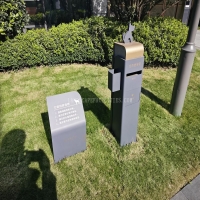
Outdoor cat and dog feces trash can; Community pet trash can; Metal multi-color design






