Welcome to the website for landscape facilities products and knowledge.

How does the table’s design contribute to its resistance against damage from wildlife or pests?
The durability of outdoor furniture, particularly tables, is significantly influenced by intentional design choices that mitigate damage from wildlife and pests. This resistance is achieved through a multi-faceted approach rooted in material science, structural engineering, and proactive barrier creation.
Firstly, the selection of inherently robust materials forms the primary defense. Hardwoods like teak, shorea, or eucalyptus possess natural oils and dense grain structures that repel moisture, deter insect boring, and resist gnawing from small animals. Alternatively, modern synthetic materials such as poly lumber (recycled plastic), powder-coated aluminum, and marine-grade polymers offer no nutritional value or scent to attract pests. Their solid, non-porous surfaces prevent insects from burrowing and are impervious to the acids in bird droppings or rodent urine, which can degrade lesser materials.
Structural design plays an equally critical role. Tables designed with clean lines, minimal seams, and enclosed underpinnings eliminate sheltered spaces where insects might nest or rodents might hide. Legs and frames that are elevated and smooth, without decorative crevices, prevent easy access for climbing pests. Furthermore, robust joinery techniques—such as mortise and tenon joints or welded metal frames—ensure the structure remains solid even if subjected to incidental impact or pushing by larger animals, preventing loosening that could create new entry points.
The integration of physical and chemical barriers is a key design contribution. Many tables incorporate finely woven, integrated metal meshes within vented sections to block entry while allowing airflow. Designers also specify the use of integrated, non-toxic pest-repellent compounds during material manufacturing. For metal components, advanced powder-coating techniques apply a thick, hardened shell that is difficult for animals to scratch or bite through, simultaneously protecting against corrosion.
Finally, intelligent design minimizes attractants. Smooth, non-porous tabletops that are easily wiped clean prevent food residue accumulation that attracts wildlife. Designs that avoid hollow components eliminate the risk of becoming a nesting cavity. By considering the behavioral patterns of local fauna—such as raccoons, squirrels, termites, or birds—designers preemptively solve problems by removing the environmental cues that invite pest interaction.
In essence, a table's resistance is not accidental but a calculated outcome of selecting hostile materials for pests, creating an inhospitable physical structure, embedding protective barriers, and eliminating attractants. This holistic design philosophy ensures longevity and preserves aesthetic integrity in natural settings.
Related search:
Recommendation
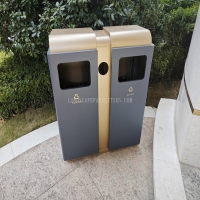
Double-bucket garbage bin, outdoor, metal, multi-color, powder-coated, double-bucket trash can






