Welcome to the website for landscape facilities products and knowledge.

How does the table’s design enhance its use in environments requiring high levels of customization?
The demand for highly customized environments—from research laboratories and advanced workshops to dynamic creative studios—has never been greater. At the heart of these adaptable spaces lies a critical yet often overlooked element: the table. Its design is no longer just about providing a flat surface; it is a foundational platform for specialization, efficiency, and innovation. So, how does a table's design specifically enhance its utility in settings requiring extreme customization?
The answer lies in a paradigm shift from static furniture to dynamic, modular systems. Modern customizable tables are engineered with a framework that supports endless reconfiguration. This often involves a robust base structure, typically aluminum extrusion or heavy-duty steel, featuring standardized channels and connection points. These integrated T-slots or mounting rails allow users to securely attach, reposition, or swap out accessories—shelves, dividers, tool holders, cable management systems, or power strips—without specialized tools. This modularity transforms a simple table into a tailored workstation that evolves with the project's needs.
Material selection is equally strategic. Surfaces are chosen not only for durability against chemicals, abrasion, or heat but also for their adaptability. Phenolic resin, stainless steel, or high-pressure laminate tops can be specified, and some designs even incorporate reversible tops or replaceable panels. This ensures the work surface itself is a customizable variable, matching the precise technical requirements of electronics assembly, biomedical testing, or prototype fabrication.
Furthermore, intelligent design incorporates inherent flexibility in form and function. Height-adjustability, whether manual or electric, caters to diverse tasks and users, promoting ergonomics in shared or multi-purpose spaces. The integration of seamless connectivity—through built-in raceways, grommets, and wireless charging pads—addresses the critical need for managing technology and data flow in a clean, organized manner. The table’s footprint and leg design are also optimized to accommodate peripheral equipment, from machinery to storage units, facilitating a holistic and uncluttered workflow.
Ultimately, a well-designed table in a high-customization environment acts as a passive enabler. It reduces the time and cost associated with modifying a space, empowers users to take direct control over their workspace configuration, and supports the precision and scalability of specialized tasks. By prioritizing modular architecture, durable and adaptable materials, and user-centric features, contemporary table design transcends its traditional role, becoming a strategic asset that directly enhances productivity, safety, and creative potential in the most demanding settings.
Related search:
Recommendation
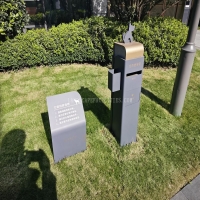
Outdoor cat and dog feces trash can; Community pet trash can; Metal multi-color design






