Welcome to the website for landscape facilities products and knowledge.

How does the table’s design account for ease of use in environments with strict hygiene requirements?
In environments where hygiene is paramount—such as laboratories, pharmaceutical cleanrooms, food processing plants, and healthcare facilities—table design transcends mere functionality. It becomes a critical component in contamination control and operational efficiency. The core principle is eliminating features that harbor pathogens and simplifying cleaning protocols.
Firstly, material selection is foundational. Stainless steel is the predominant choice due to its non-porous, corrosion-resistant surface. It withstands frequent, aggressive cleaning with harsh chemicals, steam, or high-pressure sprays without degrading. Alternative materials include specialized, non-absorbent polymers or composites with antimicrobial properties.
The design philosophy relentlessly pursues seamless construction. Tables feature fully welded, rounded corners and coved edges where the tabletop meets the sides and legs. This eliminates sharp 90-degree angles and crevices where dirt, moisture, and microbes can accumulate. Any necessary joints are sealed with FDA-approved, waterproof silicones to create a smooth, uninterrupted surface.
Leg and support structures are equally considered. Designs often utilize tubular or solid profiles that are easy to wipe down. A common feature is the cantilevered or pedestal-style leg set back from the edge, allowing for complete floor access underneath for mopping. Alternatively, legs may be mounted on easy-to-clean glides or casters made of sanitary materials.
Surface finish is deliberately smooth but not overly glossy to minimize glare. A slight texture, such as a brushed or satin finish, can be employed to hide minor scratches while maintaining cleanability. The integration of features is minimized; where sinks or utilities are required, they are seamlessly welded into the tabletop with raised, integral bowls to prevent spillage runoff onto the floor.
Ultimately, this specialized design accounting for hygiene directly enables ease of use. It reduces the time and labor intensity of sanitation cycles, ensures compliance with stringent regulatory standards, and provides a reliably clean surface that protects both the processes and the personnel. The table itself becomes an active tool in upholding a sterile environment.
Related search:
Recommendation
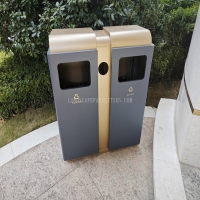
Double-bucket garbage bin, outdoor, metal, multi-color, powder-coated, double-bucket trash can






