Welcome to the website for landscape facilities products and knowledge.

How does the table’s design influence its ability to blend into natural or urban landscapes?
The design of a table extends far beyond its functional surface; it is a decisive factor in whether the object becomes an intrusive element or a harmonious component of its surroundings. In natural landscapes, successful integration often hinges on materiality and form. Tables constructed from locally sourced wood, stone, or weathered metals echo the textures and tones of the environment. Organic, irregular shapes that mimic natural formations—like a slab of stone or a fallen log—allow the table to appear as an extension of the landscape itself, rather than an imported artifact. The goal is visual quietness, achieved through a palette and profile that defer to the existing scenery.
Conversely, integrating a table into an urban landscape requires a dialogue with a different set of rules. Here, the context is defined by architectural lines, manufactured materials, and human-centric scale. A table's ability to blend in urban settings depends on its alignment with the surrounding design language. A sleek, geometric table made of powder-coated steel or concrete can complement the minimalist facade of a modern plaza. Color becomes a powerful tool; a neutral hue can create a subdued presence, while a strategically bold color might intentionally highlight the table as a focal point within the urban fabric, achieving integration through deliberate contrast rather than mimicry.
The unifying principle across both contexts is intentionality. A table's proportions, height, and sightlines must consider the sightlines and flow of the space. A low-profile table in a vast meadow minimizes visual obstruction, preserving the view. In a bustling city square, a sturdy, anchored design provides a sense of permanence and order. Ultimately, a well-designed table performs a dual role: it serves its practical purpose while acting as a subtle mediator between human activity and the existing environment. Its success is measured not by how much it is noticed, but by how naturally it seems to belong, fostering a seamless connection between people and place.
Related search:
Recommendation
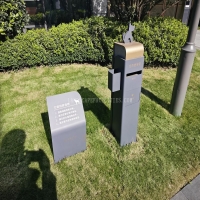
Outdoor cat and dog feces trash can; Community pet trash can; Metal multi-color design






