Welcome to the website for landscape facilities products and knowledge.

What are the recommended methods for preventing condensation on the table’s surface?
Condensation forming on your table's surface is a common issue, often leading to water rings, potential damage, and an unpleasant feel. Fortunately, several practical methods can effectively prevent this problem. Firstly, consider using physical barriers. Placing an anti-condensation table mat, coaster, or a simple cloth pad creates an insulating layer that blocks direct contact between the cold surface and moist air. For a more permanent solution, applying a specialized sealant or wax designed for your table's material can provide a protective hydrophobic coating.
Environmental control is equally crucial. Improving room ventilation by opening windows or using exhaust fans helps equalize air and surface temperatures. In areas with consistently high humidity, utilizing a dehumidifier is highly recommended to remove excess moisture from the air. Additionally, maintaining a stable, slightly warmer room temperature can prevent the table surface from becoming too cold, which is the primary catalyst for condensation.
Your choice of table material also plays a significant role. Non-porous materials like glass, sealed stone, or high-gloss laminates are less prone to moisture absorption but may show droplets more visibly. Porous materials like wood are more susceptible to damage. Therefore, selecting a table suited to your climate and combining it with the preventative measures above offers the best defense. Regular maintenance, including prompt drying of any moisture and the use of moisture-absorbing products like silica gel packs in enclosed spaces, will ensure your table remains dry, clean, and well-preserved for years to come.
Related search:
Recommendation
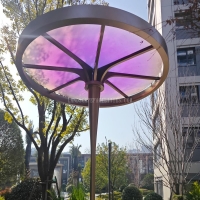
Metal frame with gradient color acrylic combined with high-end shading landscape facilities






