Welcome to the website for landscape facilities products and knowledge.

What are the options for adding soundproofing or acoustic panels to the table?
Creating a quieter workspace often involves addressing noise from your desk. For those wondering about options for adding soundproofing or acoustic panels to a table, several effective solutions exist. The primary goal is to absorb or block sound waves that cause echo, reverberation, and transmitted noise.
A popular and direct method is attaching acoustic panels to the table's surface or sides. These panels, made from materials like foam, fiberglass, or mineral wool, absorb sound energy. For the table surface itself, consider a thick, sound-absorbing desk pad or blotter. This can dampen vibrations from writing, typing, or placing objects. For the underside or vertical modesty panel, adhesive-backed acoustic foam tiles are a common DIY choice. They help prevent sound from reflecting off the hard table surface.
For a more comprehensive solution, building an acoustic table skirt or enclosure is effective. This involves attaching sound-absorbing barriers around the table's perimeter to contain noise. Materials like mass-loaded vinyl (MLV) combined with acoustic foam can be used for this purpose, blocking and absorbing sound simultaneously.
Another approach focuses on decoupling. Using isolation pads or feet under the table legs can significantly reduce structure-borne vibration noise traveling through the floor. Pair this with a heavy tabletop material or add a mass-loaded vinyl layer beneath the desktop for improved impact sound insulation.
When selecting materials, consider the Noise Reduction Coefficient (NRC). Panels with a higher NRC rating (closer to 1.0) are more absorbent. For home offices, aesthetic acoustic panels that blend with decor are available. Installation typically requires strong adhesive, Velcro strips, or mechanical fasteners, ensuring panels are securely attached without damaging the table.
Ultimately, the best option depends on your specific noise issues, table type, and budget. Combining absorption techniques with mass addition and decoupling often yields the most significant noise reduction for a more focused and professional acoustic environment.
Related search:
Recommendation
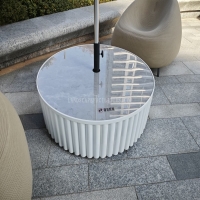
Round metal tube border design table with tempered glass or granite countertop on the top.






