Welcome to the website for landscape facilities products and knowledge.

How does the table’s shape influence the perception of hierarchy in meetings?
The geometry of a conference table is far from a neutral design choice; it is a silent architect of hierarchy, communication flow, and group psychology. A rectangular table, the most traditional format, inherently establishes a clear power structure. The person at the "head" of the table is visually and psychologically positioned as the leader or primary authority figure, creating a distinct top-down dynamic that can both reinforce command and potentially stifle open contribution from those along the sides.
In stark contrast, a round table eliminates a literal "head," promoting an atmosphere of equality and collaboration. This shape, steeped in the symbolism of King Arthur's legendary court, encourages eye contact among all participants and suggests shared ownership of the discussion. It fosters a more democratic exchange of ideas, making it ideal for brainstorming sessions or team-building workshops where hierarchy is meant to be minimized.
Square tables offer a middle ground but often create subconscious sub-groups, with individuals typically engaging more directly with those seated opposite them rather than adjacent. Meanwhile, unconventional shapes like boat-shaped or oval tables can subtly soften the rigid hierarchy of a rectangle while still maintaining a slight directional focus. The physical distance created by a large table can enforce formality, whereas a smaller, intimate table setup reduces perceived power distances.
Ultimately, the table acts as a foundational non-verbal cue. Recognizing its influence allows leaders to strategically choose a shape that aligns with their meeting's goal: a rectangle to direct and decide, a circle to collaborate and create, or a square to facilitate balanced dialogue. The shape sets the stage for interaction long before the first word is spoken.
Related search:
Recommendation
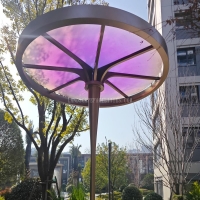
Metal frame with gradient color acrylic combined with high-end shading landscape facilities






