Welcome to the website for landscape facilities products and knowledge.

How does the table accommodate different seating arrangements and group sizes?
Modern tables are masterpieces of functional design, engineered to seamlessly accommodate diverse seating arrangements and group sizes. The primary mechanism for this adaptability is the extendable or expandable table. These designs feature ingenious inserts, butterfly leaves, or pull-out panels that discreetly tuck away when not in use. With a simple action, a compact table for four can transform into a spacious surface that comfortably seats eight or more, making it perfect for both daily use and entertaining.
Beyond simple extension, modular table systems offer unparalleled flexibility. Comprising individual units that can be arranged in various configurations—straight lines, L-shapes, or even clusters—these tables cater to unpredictable group dynamics and space constraints. Paired with this is the growing popularity of adjustable height tables, which can shift from a standard dining height to a casual bar or standing desk level, thereby inviting different styles of interaction and seating.
The foundation of this versatility often lies in the table's support structure. Pedestal bases, as opposed to four-corner legs, provide ample legroom and allow for easier addition of chairs around the perimeter without obstruction. This design consideration ensures that when expanded, every seat is equally functional and comfortable.
Ultimately, the accommodating table is a blend of thoughtful engineering and user-centric design. It anticipates the fluid nature of modern life, where gatherings can be intimate or expansive. By incorporating features like hidden leaves, modular components, and unobtrusive bases, these tables do not merely furnish a space; they actively enable connection, ensuring that no matter the number of guests, everyone has a place at the table.
Related search:
Recommendation
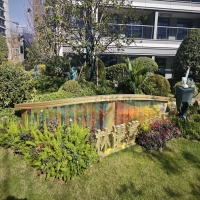
Metal and acrylic color-changing combined curtain wall for large-scale public landscape facilities






