Welcome to the website for landscape facilities products and knowledge.

How does the table’s design account for the prevention of splintering in wooden components?
Thoughtful table design proactively prevents wood splintering through multiple integrated strategies. The process begins with material selection, choosing well-seasoned, stable wood with a straight grain to minimize natural weakness points. Designers then orient components so the wood's grain runs parallel to the longest edges, significantly increasing structural integrity where hands most frequently contact the surface.
Joinery techniques play a crucial role; methods like mortise-and-tenon or dowel joints distribute stress away from vulnerable end grains. Designers incorporate rounded or beveled edges, which are less prone to chipping than sharp 90-degree corners. For high-stress areas, many designs use laminated edges where multiple wood layers are bonded, creating a composite edge far more resistant to splintering than solid wood.
Protective finishes form the final barrier. Multiple coats of polyurethane, lacquer, or penetrating oils seal the wood fibers together, preventing moisture absorption that causes swelling and subsequent splintering. Some designs incorporate edge banding—thin veneers of durable material or metal trim—to physically shield vulnerable corners. By combining grain orientation, intelligent joinery, edge profiling, and protective coatings, quality table design creates components that maintain their integrity through years of daily use without developing hazardous splinters.
Related search:
Recommendation
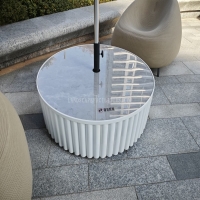
Round metal tube border design table with tempered glass or granite countertop on the top.






