Welcome to the website for landscape facilities products and knowledge.

How does the table’s design account for thermal comfort in outdoor settings?
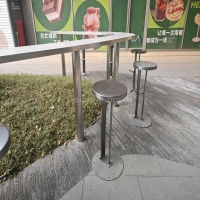
Thermal comfort in outdoor settings is a critical yet often overlooked aspect of furniture design. A well-designed outdoor table actively accounts for this through several strategic principles. Firstly, material selection is paramount. Designers opt for materials with low thermal conductivity and high reflectivity, such as certain treated woods, composites, or ceramics, which absorb less solar radiation and remain cooler to the touch compared to metals or dark plastics. Secondly, the integration of shade is a fundamental design consideration. This can be achieved through built-in cantilevered umbrellas, perforated canopies within the table structure, or designs that encourage placement under natural shade. Thirdly, innovative cooling mechanisms are being incorporated. Some designs feature hollow cores or under-table ventilation channels that promote passive air circulation, dissipating heat from the surface. Others utilize phase-change materials within the tabletop that absorb excess heat during the day and release it slowly as temperatures drop. Furthermore, the color and finish are deliberately chosen; light-colored, textured surfaces not only reflect sunlight but also reduce direct skin contact with hot, smooth planes. The overall form also contributes—elevating the table on slender legs improves airflow beneath, preventing heat buildup from radiating from paved surfaces. Ultimately, modern outdoor table design transcends mere aesthetics, evolving into a thoughtful engineering response that modulates microclimates. By synthesizing material science, passive cooling strategies, and ergonomic considerations, these designs transform outdoor spaces into thermally comfortable environments suitable for prolonged relaxation and social interaction, regardless of the sun's intensity.
Related search: