Welcome to the website for landscape facilities products and knowledge.

How does the table’s design account for ease of access for users with guide dogs?
Thoughtful table design is crucial for ensuring ease of access and comfort for users with guide dogs. A primary consideration is providing ample clearance space beneath the table. This involves designing tables with a high enough knee clearance and an open area underneath, free from obstructive crossbars or pedestals that are centrally located. This allows a guide dog to lie down comfortably and safely beside its handler without blocking aisles or creating a tripping hazard.
The table's stability is paramount. It must be sturdy and weighty enough to not tip if a dog accidentally brushes against it. Legs should be positioned at the corners rather than in the middle to maximize the under-table "cave" space. Furthermore, the use of non-reflective, matte finishes on table surfaces helps prevent glare that could disorient or disturb a working dog.
The surrounding environment is equally important. Designers must ensure there is sufficient floor space around the table for the dog and user to navigate easily. Flooring should be slip-resistant to provide secure footing for the dog. Additionally, considering the placement of the table within the room—away from high-traffic server paths and close to potential relief areas—is a key aspect of holistic, inclusive design.
Ultimately, these design choices move beyond mere compliance with regulations like the ADA. They embody a deeper commitment to inclusivity, dignity, and independence. By accounting for the needs of guide dog teams, we create public and private spaces that are truly welcoming for all.
Related search:
Recommendation
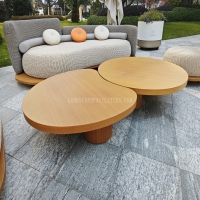
Elliptical metal outdoor table with nested design, resembling wood grain, round table






