Welcome to the website for landscape facilities products and knowledge.

How does the table’s surface finish resist scratches, stains, and UV damage?
Modern table surfaces employ sophisticated finishing technologies that create remarkable resistance against daily wear and tear. The secret lies in multiple protective layers working in harmony to defend against various types of damage.
For scratch resistance, manufacturers utilize hardened coatings such as polyurethane, epoxy resins, or ceramic-infused finishes. These materials create an exceptionally hard surface that prevents sharp objects from penetrating the core material. Some premium tables feature nanoceramic coatings where microscopic ceramic particles form an interlocking shield that's significantly harder than conventional finishes. The molecular structure of these coatings distributes impact force horizontally, making it difficult for sharp points to dig into the surface.
Stain protection begins with non-porous sealants that prevent liquid absorption. Advanced finishes incorporate cross-linking polymers that create an impermeable barrier, causing liquids to bead up rather than soak in. Many contemporary tables use catalytic conversion finishes where chemical catalysts create molecular bonds that leave no openings for stains to penetrate. Additionally, some surfaces feature integrated antimicrobial properties that prevent bacterial growth and make cleaning remarkably simple with just a damp cloth.
UV resistance is achieved through specialized additives and filtering technologies. High-performance finishes contain UV absorbers and light stabilizers that act as microscopic sunblocks for your table. These compounds absorb harmful ultraviolet radiation and convert it into harmless heat energy before it can damage the underlying material. Some manufacturers use reflective pigments that bounce UV light away from the surface, while others incorporate hindered amine light stabilizers (HALS) that neutralize free radicals formed by UV exposure.
The most durable tables often combine these technologies in layered systems. A typical high-end finish might include a base sealer, color layer, protective top coat, and specialized UV filter – each serving a specific protective function. This multi-layered approach ensures comprehensive protection while maintaining the natural beauty of the table material beneath.
Regular maintenance enhances these protective qualities. Using appropriate cleaners that don't strip protective coatings, avoiding abrasive pads, and keeping tables away from direct sunlight all contribute to long-term preservation. The evolution of table finishes represents a significant advancement in materials science, allowing furniture to maintain its aesthetic appeal while withstanding the challenges of daily use in modern homes and commercial spaces.
Related search:
Recommendation
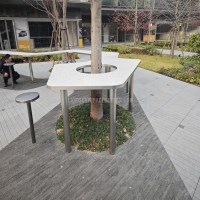
An outdoor bar counter with stainless steel and terrazzo materials in an irregular shape






