Welcome to the website for landscape facilities products and knowledge.

Are there any restrictions on the use of the table in film or television productions?
In the world of film and television production, every detail matters, including the seemingly mundane props like tables. While tables are common set pieces, their use is not without potential restrictions. These limitations primarily stem from legal and practical considerations that production teams must navigate to avoid costly delays or legal disputes.
One significant area of restriction involves intellectual property rights. If a table is a unique, artistically designed piece, it may be protected by copyright law. Using a copyrighted table design without permission, especially if it is featured prominently or its design is integral to a scene, could lead to infringement claims. Similarly, if a table bears a distinct logo or trademarked pattern, trademark issues might arise. For instance, a table with a clearly visible branded emblem could imply endorsement or create confusion, requiring clearance from the trademark holder.
Another layer of restriction comes from location agreements. When filming in a real-world location, such as a private home or a historic building, the existing furniture, including tables, is often part of the rental agreement. The production may be contractually limited in how they can alter, move, or even feature these items. Unauthorized modification could breach the contract and result in financial penalties.
Furthermore, the context in which a table is used can impose restrictions. If a scene involves a table being destroyed or used in a dangerous stunt, safety regulations and insurance policies come into play. The production must ensure that such actions are performed safely and do not violate any guild or union rules concerning stunt work and prop handling.
To mitigate these risks, professional productions rely on clearances. The art department or a dedicated clearance team is responsible for vetting all props, including tables. For mass-produced, generic tables, clearance is usually straightforward. However, for distinctive, custom-made, or branded tables, the team must secure explicit permission from the copyright or trademark owner. This often involves licensing agreements and potentially fees.
In conclusion, while a table appears to be a simple prop, its use in film and television can be subject to a web of restrictions rooted in copyright, trademark, contract law, and safety regulations. Proactive clearance is the industry's essential practice for ensuring that this everyday object does not become the source of unexpected legal challenges, allowing the creative vision to proceed without interruption.
Related search:
Recommendation
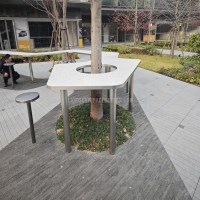
An outdoor bar counter with stainless steel and terrazzo materials in an irregular shape






