Welcome to the website for landscape facilities products and knowledge.

How does the table’s design influence the speed and efficiency of event setup and teardown?
The efficiency of event management hinges significantly on an often overlooked element: table design. While tables serve as fundamental components for displays, catering, and registration, their structural engineering directly dictates the speed and labor required for installation and breakdown. A well-considered table design transforms a logistical chore into a streamlined process, saving valuable time and reducing operational costs.
Traditional, heavy, and bulky tables present immediate challenges. Their weight demands multiple personnel for safe movement, increasing labor requirements and the risk of injury. Complicated assembly mechanisms with numerous small parts can lead to lost components and extended setup times, creating frustration and delays. Furthermore, irregular shapes or non-nestable designs consume excessive storage and transportation space, compounding inefficiencies before and after the event.
Conversely, modern table designs incorporate several key features to enhance operational flow. Lightweight materials, such as aluminum composites and advanced polymers, maintain durability while allowing for easy handling by a single person. The true game-changer is modularity. Tables with interlocking panels or tool-free, quick-connect leg systems can be assembled in minutes rather than half-hours. Folding mechanisms that allow tables to collapse into compact, wheeled units are invaluable. This portability means staff can move multiple tables at once and quickly position them according to the floor plan.
The benefits extend beyond mere speed. Ergonomic designs that minimize bending and lifting reduce physical strain on staff, leading to higher morale and fewer workplace incidents. Standardized, modular systems also offer incredible versatility; the same set of tables and components can be reconfigured to create serpentine registration desks, spacious banquet rounds, or structured exhibition booths, adapting to any event's needs without requiring specialized equipment.
Ultimately, investing in intelligently designed tables is an investment in operational excellence. By prioritizing features like lightweight construction, tool-free assembly, modularity, and integrated portability, event planners can drastically cut down on setup and teardown timelines. This not only optimizes labor allocation but also allows for greater flexibility and a quicker turnaround between events, proving that superior table design is a cornerstone of efficient and successful event management.
Related search:
Recommendation
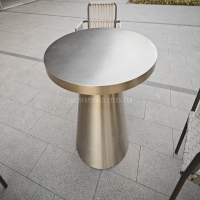
Outdoor Metal Table - Classic Outdoor Furniture, Stainless Steel Table, Durable and Reliable






