Welcome to the website for landscape facilities products and knowledge.

What are the most effective ways to use mixed materials in landscape bar counter designs?
Landscape bar counters have evolved beyond mere functional elements to become central design statements in outdoor living spaces. The strategic incorporation of mixed materials offers unparalleled opportunities to create visually striking and highly durable installations that seamlessly blend with their natural surroundings.
The most effective mixed material applications begin with understanding material compatibility and environmental considerations. Combining natural stone with thermally modified wood creates a harmonious balance between organic warmth and structural permanence. Stone surfaces provide excellent weather resistance and thermal mass, while wood elements introduce tactile warmth and natural aesthetics. This combination works particularly well in transitional spaces where the bar counter connects indoor and outdoor environments.
Metal accents represent another powerful component in material mixing strategies. Powder-coated aluminum or Corten steel edging can define clean lines while providing protective barriers between different materials. Brass or copper inlays can introduce subtle luxury elements that develop attractive patinas over time, adding character to the design. These metallic elements should be strategically placed in areas protected from direct exposure to minimize maintenance requirements.
Concrete continues to gain popularity for its versatility and modern aesthetic. When combined with teak or ipe hardwood, concrete countertops create compelling textural contrasts. The integration of aggregate elements like crushed glass or recycled materials within concrete surfaces can create visual connections to other design elements in the landscape. For coastal environments, combining marine-grade stainless steel with quartz composite surfaces ensures maximum durability against salt spray and humidity.
The sequencing of materials significantly impacts both aesthetics and functionality. Positioning more durable materials like granite or porcelain slabs in high-impact areas while reserving warmer materials like cedar or teak for arm rests and vertical elements creates both visual interest and practical longevity. Lighting integration deserves special consideration - embedding subtle LED strips between material transitions can create dramatic nighttime effects while highlighting the material diversity.
Successful material mixing requires attention to expansion coefficients and drainage considerations. Always incorporate expansion joints where different materials meet and ensure proper slope for water runoff. The most sophisticated designs create material conversations where each element enhances the others while maintaining its unique characteristics, resulting in landscape bar counters that are both artistic statements and highly functional entertainment spaces.
Related search:
Recommendation
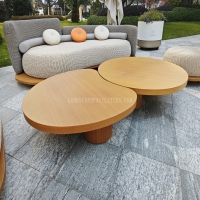
Elliptical metal outdoor table with nested design, resembling wood grain, round table






