Welcome to the website for landscape facilities products and knowledge.

What are the acoustic properties of materials used in landscape bar counters, and do they affect outdoor soundscapes?
The design of outdoor spaces, particularly landscape bar counters, involves careful consideration of materials not only for aesthetics and durability but also for their acoustic properties. These properties significantly influence the overall outdoor soundscape, affecting both ambiance and noise levels. Common materials used include wood, concrete, stone, metals, and composites, each with distinct acoustic characteristics such as sound absorption, reflection, and transmission.
Wood, for instance, offers moderate sound absorption due to its porous nature, helping to reduce echo and soften noise in outdoor settings. This can create a more pleasant environment by minimizing harsh sounds. Concrete and stone, on the other hand, are highly reflective materials. They tend to bounce sound waves, potentially amplifying noise and contributing to a louder, more reverberant soundscape. This might be undesirable in tranquil outdoor areas but can be managed with strategic design.
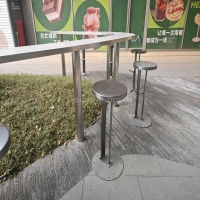
Metals like stainless steel are often used for their durability but exhibit high sound reflection and can produce ringing noises upon impact, which might disrupt the acoustic comfort. Composites and synthetic materials can be engineered for better acoustic performance, offering tailored absorption properties to balance sound levels.
The impact on outdoor soundscapes is profound. Materials with good absorption properties help in noise reduction, lowering overall decibel levels and reducing echoes. This enhances speech intelligibility and comfort for patrons, making social interactions more enjoyable. Conversely, highly reflective materials can lead to sound pollution, especially in urban environments, where traffic or crowd noises might be exacerbated.
Moreover, the arrangement and combination of materials play a crucial role. Integrating absorbent materials in key areas, such as bar tops or nearby surfaces, can mitigate negative acoustic effects. For example, using wooden panels or acoustic tiles alongside reflective stones can create a balanced soundscape that feels both vibrant and relaxed.
In conclusion, the acoustic properties of materials used in landscape bar counters do affect outdoor soundscapes by influencing noise levels, echo, and overall auditory experience. Selecting materials with appropriate sound absorption or reflection capabilities is essential for designing functional and enjoyable outdoor spaces that promote comfort and reduce noise intrusion.
Related search: