Welcome to the website for landscape facilities products and knowledge.

What are the most common design inspirations for landscape bar counters in different regions?
The evolution of landscape bar counters reflects a fascinating interplay between regional aesthetics and functional design. Across different continents, designers draw from local cultural heritage, natural environments, and architectural traditions to create unique hospitality experiences.
In Mediterranean regions, bar counters often incorporate rustic stone textures and terracotta elements inspired by ancient tavernas. These designs typically feature curved countertops that mimic coastal rock formations, complemented by hand-painted ceramic tiles and warm earth tones that evoke sun-drenched landscapes.
Scandinavian influences bring minimalist elegance to bar design, emphasizing clean lines and natural light. Counters crafted from pale birch or ash wood create organic flows, often extending into seating areas that resemble arranged forest clearings. The integration of indoor greenery and raw materials reflects the Nordic connection to nature.
Asian-inspired designs, particularly from Japan, demonstrate mastery in spatial harmony. Zen principles manifest through carefully balanced proportions and minimalist material palettes. Counters may incorporate water features reminiscent of koi ponds or use bamboo elements that create rhythmic patterns, achieving tranquility through calculated asymmetry.
Tropical destinations contribute vibrant concepts with thatched roofing elements and organic shapes. These designs frequently utilize local hardwoods and incorporate living plant walls, blurring boundaries between interior and exterior spaces. The counters often flow into outdoor areas, creating seamless transitions that embrace island lifestyles.
Modern urban interpretations increasingly blend these regional influences, creating fusion designs that incorporate multiple cultural elements while maintaining functionality. The most successful implementations balance aesthetic appeal with practical considerations like traffic flow and service efficiency, proving that effective design transcends geographical boundaries through universal principles of form and function.
Related search:
Recommendation
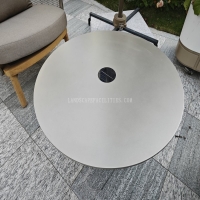
Outdoor stainless steel table with solar-powered ambient lighting feature - excellent design.






