Welcome to the website for landscape facilities products and knowledge.

What are the most common issues with the stability of floating landscape tables?
Floating landscape tables are a stunning addition to water features, offering both functionality and aesthetic appeal. However, they often face stability challenges due to environmental and design factors. Here are the most common issues and their solutions:
1. Uneven Weight Distribution: Floating tables can tilt or sink if weight isn’t evenly distributed. To fix this, ensure the table is balanced or use adjustable buoyancy aids.
2. Material Degradation: Constant exposure to water and sunlight can weaken materials like wood or low-quality plastics. Opt for UV-resistant and waterproof materials like marine-grade polymers.
3. Wave and Wind Impact: In open water, waves and wind can destabilize tables. Anchoring systems or placing tables in calmer areas can mitigate this.
4. Poor Buoyancy Design: Insufficient floatation support leads to instability. Upgrade to high-density foam or airtight chambers for better buoyancy.
5. Algae and Debris Buildup: Slippery surfaces or added weight from debris can cause instability. Regular cleaning and anti-algae treatments are essential.
By addressing these issues, you can enjoy a stable and long-lasting floating landscape table in your outdoor space.
Related search:
Recommendation
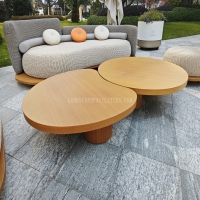
Elliptical metal outdoor table with nested design, resembling wood grain, round table






