Welcome to the website for landscape facilities products and knowledge.

What are the thermal comfort differences between perforated and solid metal tops?
When comparing perforated and solid metal tops, thermal comfort emerges as a critical factor influenced by design and material properties. Perforated metal tops excel in heat dissipation due to their porous structure, allowing air to circulate freely and reduce surface temperature. This design minimizes heat buildup, making them ideal for environments where prolonged contact occurs, such as desks or industrial workstations.
Solid metal tops, on the other hand, retain heat more effectively, which can lead to discomfort in warm conditions. Their non-porous surface traps heat, often requiring additional cooling measures like fans or insulation. However, solid tops may be preferable in colder settings where heat retention is beneficial.
Key differences include airflow efficiency (perforated tops promote ventilation) and heat retention (solid tops maintain warmth). For ergonomic and thermal comfort, perforated designs are often favored in warmer climates or high-heat applications, while solid tops suit controlled or cooler environments. Choosing between them depends on climate, usage, and personal preference for temperature regulation.
Related search:
Recommendation
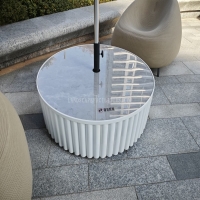
Round metal tube border design table with tempered glass or granite countertop on the top.






