Welcome to the website for landscape facilities products and knowledge.

What is the table’s resistance to damage from ice or freezing conditions?
When evaluating a table's resistance to damage from ice or freezing conditions, the core consideration is its material composition and construction. Solid wood tables, particularly those made from dense hardwoods like teak or oak, generally demonstrate good freeze resistance due to their natural cellular structure which allows for slight expansion and contraction. However, they remain susceptible to cracking if water penetrates and freezes within the grain.
Metal tables, especially aluminum and powder-coated steel, typically offer high resistance to ice damage as metals contract uniformly in cold temperatures. The critical vulnerability lies in the protective finish; once compromised, rust can accelerate. Plastic and synthetic resin tables excel in freezing conditions as they are non-porous and flexible, resisting thermal shock, though extreme cold can make some polymers brittle.
The true risk often comes from the freeze-thaw cycle. Water seeps into microscopic pores, expands as it freezes (by approximately 9%), and creates internal pressure that can splinter wood, delaminate veneers, or crack coatings. Proper sealing with appropriate outdoor finishes is paramount for porous materials. For ultimate durability in icy climates, choose tables specifically rated for all-weather or marine use, featuring materials like high-density polyethylene (HDPE), stainless steel, or fully sealed tropical hardwood. Regular maintenance—including drying surfaces before a freeze and using protective covers—dramatically extends any table's lifespan in freezing conditions.
Related search:
Recommendation
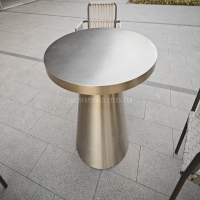
Outdoor Metal Table - Classic Outdoor Furniture, Stainless Steel Table, Durable and Reliable






