Welcome to the website for landscape facilities products and knowledge.

Are there any specific guidelines for using the table in coastal or beachfront areas?
Utilizing tables in coastal or beachfront areas requires specific considerations distinct from standard outdoor use. The primary challenge is the highly corrosive marine environment, characterized by salt spray, high humidity, and intense UV radiation. Therefore, material selection is paramount. Opt for inherently corrosion-resistant materials such as marine-grade aluminum, stainless steel (particularly grades 316 or 304), or certain treated hardwoods like teak. Avoid ordinary steel or iron, which will rust rapidly.
Beyond material, design and placement are critical. Tables should have sturdy, wind-resistant construction to withstand strong sea breezes. Avoid complex designs with numerous crevices where salt and sand can accumulate, accelerating wear. Secure or weight down lightweight furniture to prevent it from becoming a hazard. Regular maintenance is non-negotiable; frequently rinse tables with fresh water to remove salt deposits and apply protective coatings as recommended by the manufacturer.
Furthermore, consider local regulations and environmental impact. Some coastal management zones have rules regarding permanent or semi-permanent structures to protect dunes and wildlife. Always anchor furniture responsibly to prevent damage to sensitive ecosystems. Adhering to these guidelines ensures your coastal table is durable, safe, and environmentally conscious, providing lasting enjoyment by the sea.
Related search:
Recommendation
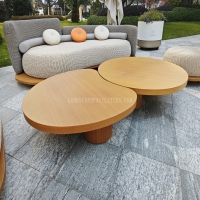
Elliptical metal outdoor table with nested design, resembling wood grain, round table






