Welcome to the website for landscape facilities products and knowledge.

What is the table’s performance in environments with frequent temperature fluctuations?
The performance of a table in environments with frequent temperature fluctuations is fundamentally determined by its material composition, construction quality, and design engineering. Solid wood tables, for instance, are naturally hygroscopic, meaning they absorb and release moisture from the air. In high-temperature, low-humidity conditions, wood contracts; in cooler, damp conditions, it expands. This natural movement can lead to warping, cracking, or joint separation if the table is poorly constructed or made from inadequately seasoned wood. High-quality solid wood furniture accounts for this through techniques like using quarter-sawn lumber, which moves less, and incorporating engineered joinery that allows for slight movement.
Engineered materials like medium-density fiberboard (MDF) with quality laminates, high-pressure laminates (HPL), and thermofoil are generally more dimensionally stable. Their manufactured core resists the direct effects of humidity changes, though extreme or rapid temperature swings can still stress adhesive bonds or cause veneers to delaminate if the product is of inferior quality.
Metal and glass tables exhibit different behaviors. Metals expand and contract with temperature at predictable rates (thermal expansion). Aluminum has a high coefficient, while steel is lower. Robust furniture design incorporates expansion joints, flexible fasteners, or strategic welding patterns to accommodate this movement without structural compromise. Tempered glass is highly stable but requires careful mounting in its frame to prevent stress points from temperature-induced frame movement.
The critical factor is not just the material, but the integration of materials and construction. A table with a solid wood top fastened rigidly to a metal base is a recipe for trouble, as the two materials will expand and contract at different rates, causing stress. Successful designs either use compatible materials or create intelligent connections that permit independent movement.
For optimal performance in volatile environments, seek tables made from stable, seasoned materials, featuring robust joinery (like mortise-and-tenon or doweled joints), and finishes that seal the material from moisture exchange. Proper acclimatization of the furniture upon delivery and maintaining a relatively stable indoor climate will significantly enhance its longevity and appearance, ensuring the table remains both functional and aesthetically pleasing despite the thermal challenges of its surroundings.
Related search:
Recommendation
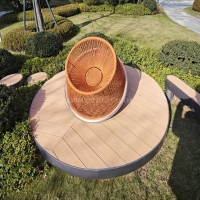
Swivel chair-Specialty steel structure woven rattan leisure chair with rotatable design






