Welcome to the website for landscape facilities products and knowledge.

What is the table’s performance in areas with high pollution or industrial activity?
When selecting outdoor furniture for areas with high pollution or intense industrial activity, performance hinges on material science and protective engineering. Standard tables often succumb to corrosive chemicals, abrasive dust, and acid rain, leading to rapid deterioration. High-performance tables, however, utilize specific materials to excel in these harsh conditions.
The primary champions are powder-coated aluminum and stainless steel (particularly Grade 304 or 316). Powder coating provides a thick, uniform shield against moisture and corrosive agents, while stainless steel's chromium oxide layer offers inherent rust resistance. For tabletops, solid polymer, marine-grade polymer lumber, or tempered glass are superior choices, as they resist chemical etching, staining, and are easy to clean. Concrete tables, while heavy, are also highly inert and resilient.
Key design features include fully welded frames (no moisture-trapping joints), seamless construction, and elevated feet to avoid ground debris and pooling water. Maintenance is simplified: regular rinsing with water to remove particulate matter and prompt cleaning of spills are often sufficient, avoiding the need for constant painting or sealing.
In conclusion, a table's success in polluted or industrial settings is not accidental. It requires a deliberate selection of non-porous, corrosion-resistant materials and robust construction. Investing in such engineered furniture ensures long-term functionality, safety, and aesthetics, transforming challenging outdoor spaces into viable, lasting areas for use.
Related search:
Recommendation
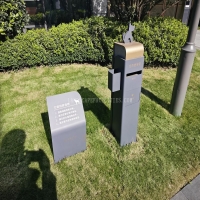
Outdoor cat and dog feces trash can; Community pet trash can; Metal multi-color design






