Welcome to the website for landscape facilities products and knowledge.

What is the table’s performance in high-wind conditions for stability?
When enjoying a meal or gathering outdoors, a sudden gust of wind can quickly turn a pleasant experience into a chaotic one. The performance of your table in high-wind conditions is a critical, yet often overlooked, aspect of outdoor furniture stability. A table's ability to withstand wind depends on several key factors.
Firstly, the weight and center of gravity are paramount. Heavy materials like solid stone, thick concrete, or dense hardwoods provide inherent resistance. Tables with a low and centralized center of gravity are less prone to tipping. Secondly, the base design is crucial. A single, central pedestal base can be more vulnerable than a four-legged design or a robust, splayed leg structure that offers a wider footprint. Tables with cross-braces or a trestle design significantly enhance lateral stability.
The table's profile also plays a role. A tall, lightweight table with a large, flat top acts like a sail, catching more wind. Opting for a lower height or a tabletop with perforations (like slats or a mesh design) allows wind to pass through, reducing force. Finally, proactive anchoring is the ultimate solution. Many high-quality outdoor tables feature ground anchor points for securing them with stakes or cables, ensuring they remain steadfast even during storms.
In conclusion, a table's performance in high winds is not a matter of luck but of design. For maximum stability, look for substantial weight, a wide and reinforced base, an aerodynamic form, and the option for permanent anchoring. Investing in a table with these features guarantees your outdoor setup remains secure and stable, allowing you to relax without worrying about the weather.
Related search:
Recommendation
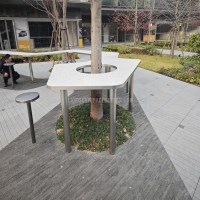
An outdoor bar counter with stainless steel and terrazzo materials in an irregular shape






