Welcome to the website for landscape facilities products and knowledge.

What are the most notable circular economy practices associated with the Landscape Square table?
The Landscape Square table stands as a prominent example of how modern furniture design integrates core circular economy principles, moving beyond a linear "take-make-dispose" model. Its most notable practices begin with material sourcing. The table's primary structure is crafted from post-consumer recycled aluminum and plastics, diverting waste from landfills and reducing virgin resource extraction. This is complemented by a tabletop made from FSC-certified wood or rapidly renewable bamboo, ensuring responsible forestry management.
A key circular feature is its modular and repairable design. Components are engineered for easy disassembly, allowing for straightforward part replacement or upgrade instead of discarding the entire unit. This extends the product's lifespan significantly. Furthermore, the manufacturer operates a take-back program, where old tables are collected, disassembled, and their materials fed back into production cycles for new furniture items.
The design for durability ensures the table withstands long-term use, while its timeless aesthetic avoids stylistic obsolescence. These interconnected practices—from recycled content and sustainable sourcing to modularity and end-of-life recycling—collectively minimize waste, conserve resources, and exemplify a closed-loop system for sustainable office and home furnishings.
Related search:
Recommendation
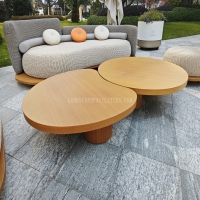
Elliptical metal outdoor table with nested design, resembling wood grain, round table






