Welcome to the website for landscape facilities products and knowledge.

How does the table’s design facilitate easy integration with outdoor umbrellas or shades?
Modern outdoor table design prioritizes seamless integration with umbrellas and shades, transforming patios and gardens into comfortable, sun-protected retreats. This integration is primarily facilitated through several key design features. The most common is a pre-drilled center hole, typically 1.5 to 2 inches in diameter, allowing a standard umbrella pole to pass directly through the table's middle. This central placement provides stable, balanced shade coverage for all seated guests. For tables without a permanent hole, many designs incorporate a versatile two-piece construction. The tabletop splits into sections that can be separated to create a central gap for the umbrella pole, offering flexibility when shade is not required.
Beyond the central hole, innovative clamping systems are increasingly popular. These include built-in, adjustable side clamps or channels along the table's edge that securely grip an umbrella pole without the need for a central hole, freeing up the table's surface area. Stability is paramount, and table designs counterbalance the umbrella's wind-catching profile with substantial weighted bases, wider legs, or lower centers of gravity. Materials like powder-coated aluminum, synthetic rattan, and treated teak are chosen not only for weather resistance but also for their strength to support umbrella stands. Furthermore, designers consider cable management by incorporating discreet grooves or sleeves to neatly route and secure the guy wires of larger market-style umbrellas, ensuring both safety and a clean aesthetic. Ultimately, these thoughtful design elements work in concert to create a unified, functional, and stylish outdoor living space where the table and shade structure perform as a single, harmonious unit.
Related search:
Recommendation
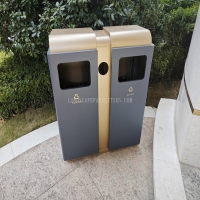
Double-bucket garbage bin, outdoor, metal, multi-color, powder-coated, double-bucket trash can






