Welcome to the website for landscape facilities products and knowledge.

How does the table’s design accommodate users with mobility challenges or disabilities?
Contemporary table design has evolved significantly to prioritize accessibility and inclusivity for users with mobility challenges or disabilities. At the core of this design philosophy is adherence to standards like the Americans with Disabilities Act (ADA), which mandates specific dimensions for knee clearance—typically a minimum of 27 inches in height, 30 inches in width, and 19 inches in depth—to comfortably accommodate a wheelchair user. This fundamental clearance transforms a standard piece of furniture into an accessible workstation or dining surface.
Beyond basic clearance, innovative features enhance usability. Adjustable-height mechanisms, whether manual crank or electric motor, allow tables to be lowered or raised to suit individual needs, promoting ergonomic posture for both seated and standing users. Tables are also designed with careful attention to edge profiles, often featuring rounded or softened corners to prevent injury, and utilizing materials with contrasting colors or textures to aid users with visual impairments. The strategic placement of support structures, such as pedestal bases or offset legs, maximizes open floor space for easier approach and maneuverability.
Furthermore, designers integrate sensory considerations, selecting materials that are tactilely pleasant and minimizing reflective surfaces that could cause glare. The control interfaces for adjustable features are designed to be intuitive, with large buttons or easy-grip handles. This holistic approach to accessible table design—encompassing dimensional compliance, adaptive functionality, and sensory awareness—ensures that furniture is not merely compliant but genuinely empowering, fostering independence and seamless participation in work, social, and home environments for all individuals.
Related search:
Recommendation
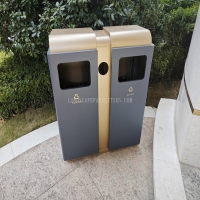
Double-bucket garbage bin, outdoor, metal, multi-color, powder-coated, double-bucket trash can






