Welcome to the website for landscape facilities products and knowledge.

What are the most common import or export regulations affecting the Landscape Square table?
The international trade of Landscape Square tables, a popular category of outdoor furniture, is governed by a complex web of regulations that importers and exporters must diligently navigate. Non-compliance can lead to costly delays, seizures, or penalties. The most common regulations affecting these shipments typically fall into several key areas.
First and foremost is accurate HS Code Classification. Landscape Square tables must be assigned the correct Harmonized System code, often under chapter 94 (Furniture) or 44 (Wood). For metal-framed tables with wooden tops, classification can be nuanced. An incorrect code misdeclares the product's value and material composition, triggering customs disputes and incorrect duty assessment.
Customs Duties and Taxes are directly tied to the HS code and the country of origin. Exporting from a country with a Free Trade Agreement (FTA) to a partner country can significantly reduce or eliminate duties, provided the proper Certificate of Origin is supplied. Without it, the full Most-Favored-Nation (MFN) tariff rate applies, impacting final cost and competitiveness.
Material Restrictions and Phytosanitary Measures are critical for wooden components. Many countries, including the US, EU, and Australia, enforce strict ISPM 15 regulations, requiring all wood packaging material (pallets, crates) to be heat-treated or fumigated and marked with an official stamp. Solid wood table tops may also require phytosanitary certificates proving the wood is pest-free. Restrictions on certain treated woods or endangered species (CITES regulations) may also apply.
Product Safety and Standards Compliance is essential for market access. The destination market may mandate specific safety standards for outdoor furniture. For the EU, this means CE marking and compliance with relevant EN standards for stability, mechanical safety, and, if applicable, chemical restrictions under REACH. The US may require compliance with ASTM standards or regulations from the Consumer Product Safety Commission (CPSC), particularly concerning lead content in surface coatings or structural integrity.
Proper Documentation and Labeling forms the backbone of a smooth shipment. A complete commercial invoice, packing list, bill of lading/air waybill, and the aforementioned certificates are mandatory. Inaccurate or incomplete paperwork is a primary cause of clearance delays. Furthermore, country of origin labeling on the product itself is often a legal requirement in the final market.
Finally, Export Control Regulations should not be overlooked. While Landscape Square tables are generally not restricted dual-use items, exporters must verify that neither the end-user, end-use, nor destination country is subject to trade sanctions or embargoes administered by bodies like the U.S. Bureau of Industry and Security (BIS).
Successful global trade in Landscape Square tables hinges on proactive compliance. Partnering with a experienced freight forwarder or customs broker and conducting thorough due diligence on the target market's specific requirements are the most effective strategies for ensuring seamless cross-border transactions.
Related search:
Recommendation
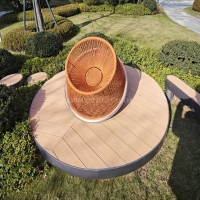
Swivel chair-Specialty steel structure woven rattan leisure chair with rotatable design






