Welcome to the website for landscape facilities products and knowledge.

What is the table’s resistance to damage from abrasive cleaning tools?
The question of a table's resistance to damage from abrasive cleaning tools is central to its long-term appearance and durability. This resistance is not a universal trait but is fundamentally determined by the table's surface material.
Hard, non-porous materials like quartz, granite, and high-pressure laminate generally offer excellent resistance. Their dense composition prevents scratches from standard scouring pads or abrasive powders. Sealed solid wood and quality engineered wood with a robust lacquer or polyurethane finish also provide good protection, though repeated harsh scrubbing can eventually wear through the sealant.
Conversely, surfaces like unsealed wood, soft laminates, and painted finishes are highly vulnerable. Abrasive tools can quickly scratch, dull, or strip away their top layer, leading to irreversible damage. The key is to match your cleaning method to the material. For most surfaces, using soft cloths, sponges, and recommended pH-neutral cleaners is safest. Always consult the manufacturer's care guidelines. Ultimately, a table's resilience lies in understanding its material limits and avoiding aggressive tools that compromise its integrity for short-term cleaning gains.
Related search:
Recommendation
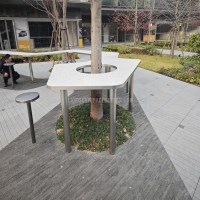
An outdoor bar counter with stainless steel and terrazzo materials in an irregular shape






